
Infrared Heating Technology
The Ultimate Infrared Buyer’s Guide:
How to Choose the Right Industrial Infrared Heater
Infrared heating (IR heating) is a method of heat transfer that uses radiant energy to directly heat objects. Instead of warming the air first, like the convection system your oven at home uses, an infrared heater uses a heat source like a quartz lamp or ceramic element to produce electromagnetic radiation in the infrared spectrum (0.75 to 1000 microns). When that energy reaches a surface, it is absorbed, which causes the object to be heated. This fundamental difference explains why IR systems are faster and more efficient than convection heating.
When integrated into industrial ovens and furnaces, infrared heating provides rapid, energy-efficient performance ideal for high-speed manufacturing, enabling improved production speed, reduced energy consumption, and highly uniform results.
This guide provides an overview of infrared heating to help you make an informed purchasing decision based on your materials, process requirements, and operational goals.
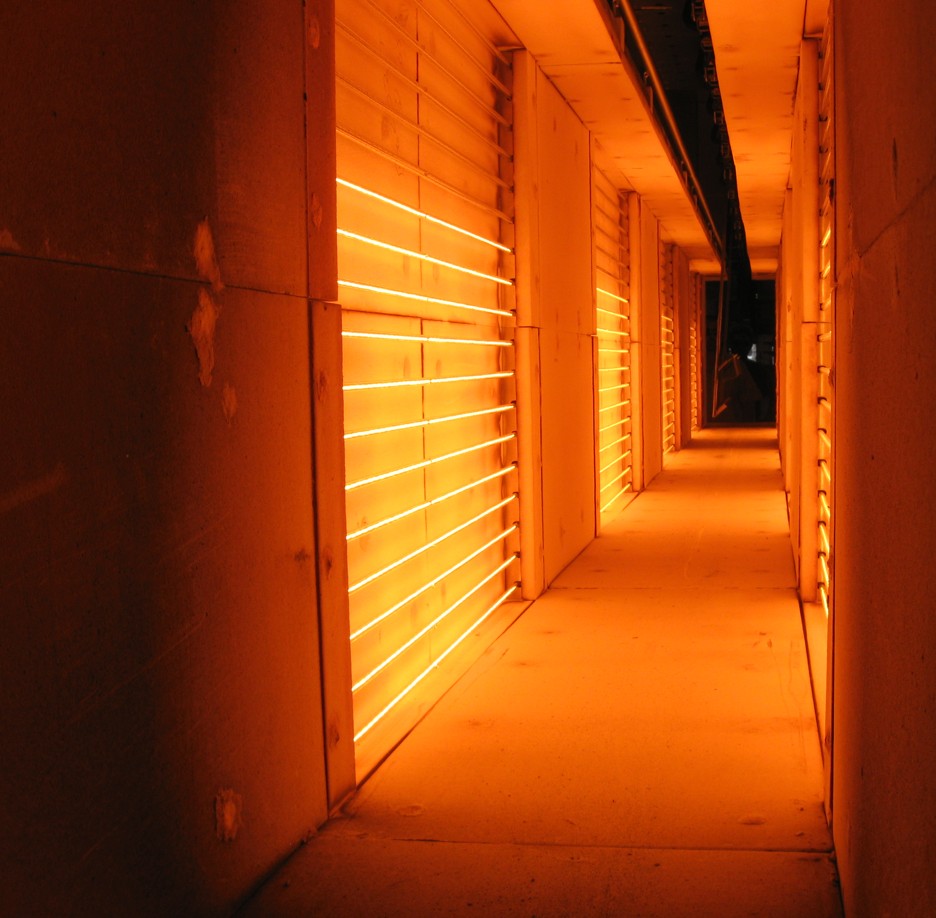
Features and Benefits of Infrared Heating
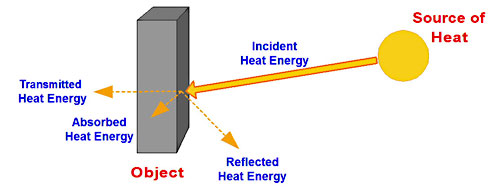
The interaction of heat energy with an object explains how when electromagnetic energy hits an object, one or more things occur: The energy is reflected, transmitted (passed through), or absorbed by the object.
With infrared heating, energy is absorbed directly by the part being heated, rather than the surrounding air. Because an infrared heater transfers heat through radiation instead of air circulation, it can be focused precisely where it’s needed, providing numerous benefits for industrial processes.
Key Features
- Direct Radiant Heating: Delivers energy directly to the product, reducing heating time.
- Fast Response Times: IR heaters can reach operating temperatures within seconds.
- Zoned Control: Enables precise temperature control for different parts of an oven and can even be targeted to different areas of a product to create desired temperature profiles.
- Clean Operation: No open flames or combustion byproducts; ideal for clean manufacturing environments.
- Compact Footprint: Reduces oven size since no air-circulation equipment or ductwork is required.
Benefits
- Energy Efficiency: Uses up to 50% less energy than convection ovens.
- High Throughput: Faster cycle times reduce bottlenecks in production.
- Precision: Ideal for heat-sensitive materials requiring targeted heating.
- Lower Maintenance: Fewer moving parts and heat stays localized, preventing damage to more sensitive components.
- Reduced Emissions: Energy provided by electricity rather than combustion.
- Repeatability and Consistency: Less impact from exterior environmental conditions means better repeatability and consistency from summer to winter.
Suitable Applications and Materials for Infrared Heating
Infrared ovens and furnaces are ideal for various industry applications that require fast and targeted heating.
Ideal Applications
- Paint and Powder Coating
- Thermoforming
- Adhesive Drying
- Textile Processing
- Food Processing
- Glass Processing (Bending, Lamination, Tempering)
- Annealing and Sintering
- Continuous Coil Coating
Compatible Materials
- Plastics (PET, PVC, ABS, HDPE)
- Metals (Aluminum and Steel, especially coated surfaces)
- Glass
- Composites
- Textiles
- Food Products (Meats, Baked Goods)
- Paper and Cardboard
IR heating performs best on materials with high surface absorptivity and those that require surface or near-surface heating. IR heating is particularly useful for drying applications, whether removing water or drying a coating due to water’s high absorption rates of infrared energy.
How to Select the Correct Infrared Heating Wavelength for Your Application
Although infrared heating spans from 0.75 to 1000 microns, most industrial manufacturing processes use wavelengths of 6 microns or less. Within that range, IR is typically classified as either short, medium, or long wave. Choosing an Infrared heater with the correct wavelength depends on your material’s absorption characteristics and the depth of heating required.
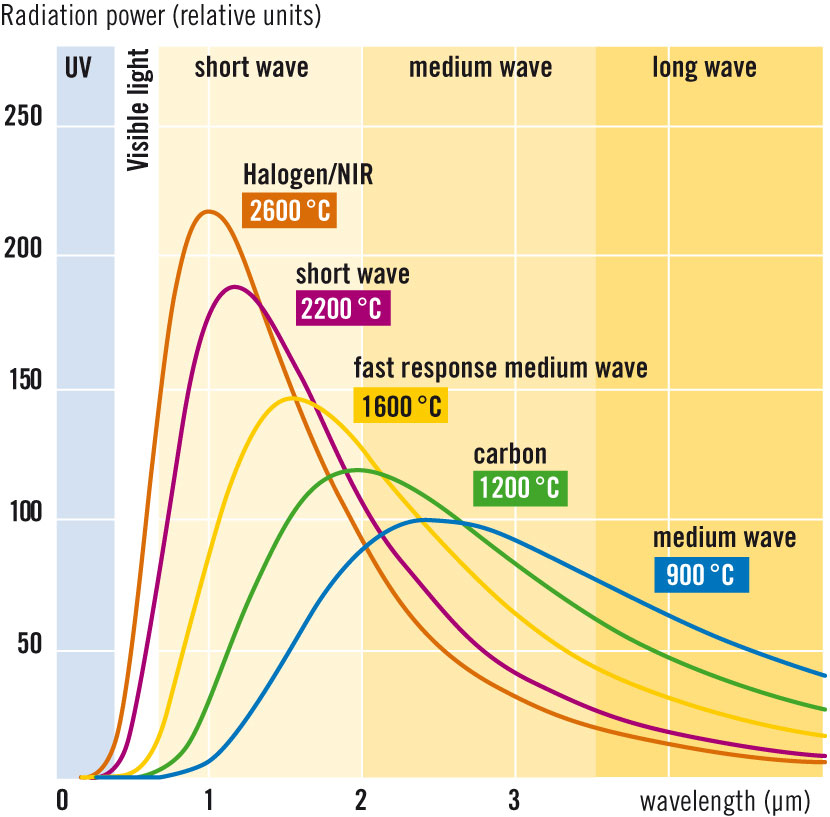
Infrared heater wavelengths and operating temperatures are shown as part of an overview of the standard types of heaters and their operating temperatures.
Shortwave Infrared (Near-IR)
- Wavelength: 0.75–2.0 µm
- Heat Penetration: Deeper than medium or long – good for thicker materials
- Response Time: Less than 5 seconds
- Best For: Metal processing, coil coating, powder coating, fast processes with very limited heating time available
- Visual: Commonly glows bright red or white-hot
Mediumwave Infrared
- Wavelength: 2.0–3.5 µm
- Heat Penetration: Surface to moderate depth
- Response Time: 5–60 seconds
- Best For: Plastics, water-based coatings, textiles, paper, glass processing
- Visual: Glows dull red to bright orange
Longwave Infrared
- Wavelength: 3.5–6.0 µm
- Heat Penetration: Surface
- Response Time: 5–10 minutes
- Best For: Batch processes or volume heating
- Visual: Ranges from undetectable to dull red
Tip: The choice between wavelengths depends on the absorption characteristics of your material. Materials with dark or matte surfaces absorb IR more efficiently and may require less power. Lab trials or absorption data can help determine the appropriate wavelength for your application. Water, for example, readily absorbs infrared energy in the mediumwave range, making drying and water removal applications very well suited to infrared heating.
Comparison to Other Forms of Heating
|
Feature |
Infrared |
Convection |
Induction |
|---|---|---|---|
|
Heating Mechanism |
Radiation |
Heated air circulation |
Generate eddy currents within conductive materials |
|
Speed |
Fast |
Moderate |
Very fast |
|
Efficiency |
High |
Moderate to low |
High |
|
Control |
High precision |
Average |
High Precision |
|
Best For |
Surface or thin materials |
General-purpose heating |
Electrically Conductive Metals |
|
Maintenance |
Low |
Moderate (fans, filters) |
Moderate |
|
Capital Cost |
Moderate |
Low |
High |
Infrared heating offers unique advantages in applications requiring rapid, targeted heating, especially where surface processing is crucial. Unlike convection heating, it delivers higher throughput and more efficient energy use. While induction can also be efficient, it has a high up-front cost and only works on electrically conductive materials.
Conclusion
Infrared ovens and furnaces are a powerful solution for industries seeking fast, energy-efficient, and precise heating. With varying wavelength options and zoning configurations, infrared heating technology can optimize throughput, reduce costs, and improve product quality.
Three essential factors when choosing an infrared heating system are:
- Match the wavelength to your material and application.
- Consider the scale of your operation and whether increasing production rates in the heating process can be matched by other equipment.
- Evaluate energy savings and return on investment.
Choosing the right infrared heating system can lead to substantial operational benefits and long-term value. Get a custom quote on your perfect infrared heating system today!
Get a Custom Infrared Solution for Your Application
With over six decades of engineering & infrared technology expertise, Casso-Solar is ready to address your project needs. Reach out to our specialists today.